
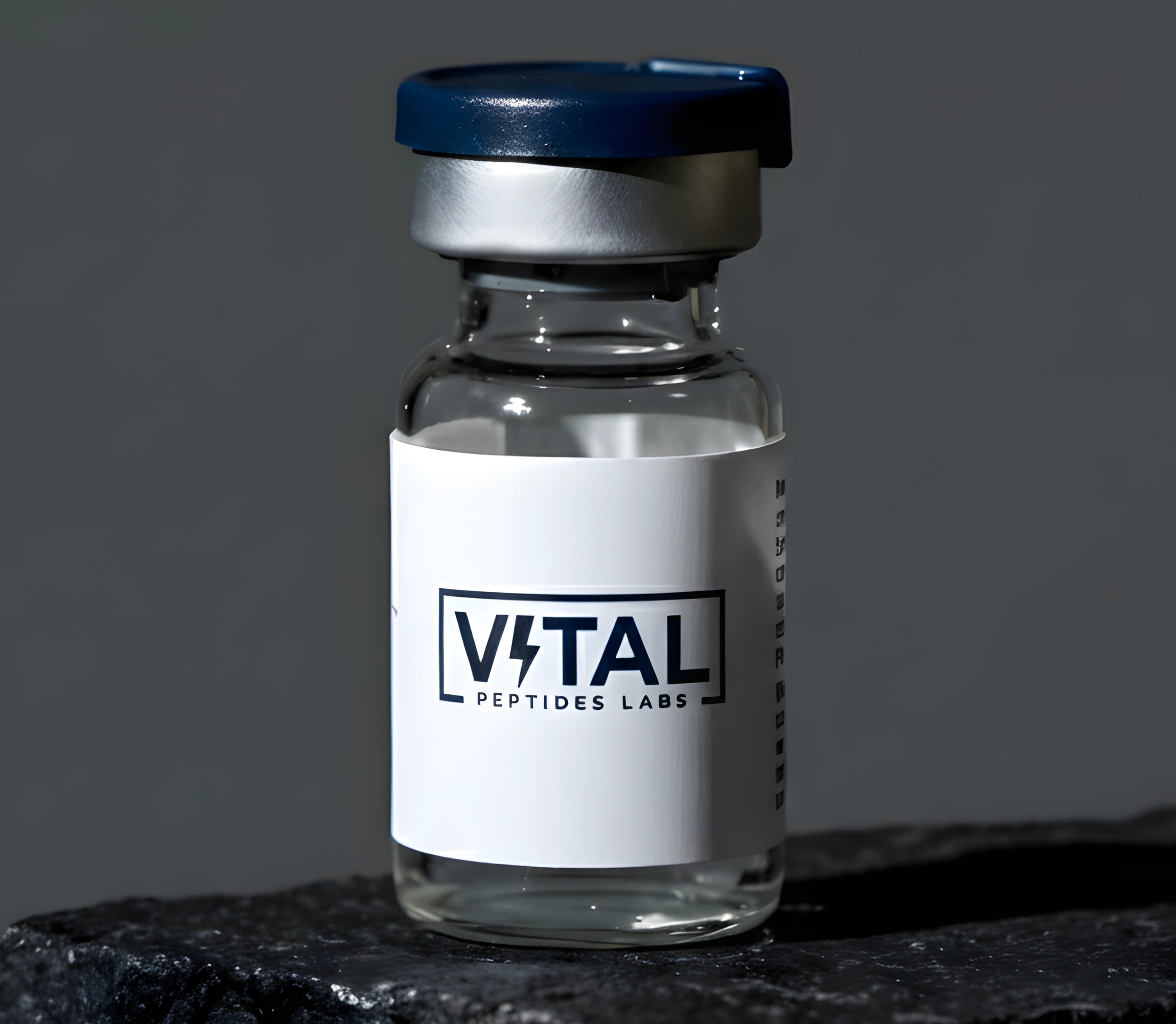
Ipamorelin
GH-releasing peptide · 10mg
99%+ Pure$65
Product Description
Ipamorelin is a pentapeptide selective secretagogue that specifically targets ghrelin receptors (GHS-R1a). As a selective GHRP, it stimulates growth hormone release through a distinct mechanism from GHRH. Researchers use Ipamorelin to investigate the ghrelin pathway, growth hormone dynamics, and metabolic signaling without the broad neuroendocrine effects of less selective compounds.
Expert Insight
“Ipamorelin's selectivity for ghrelin receptors makes it an elegant research tool for isolating GHRP signaling from other neuroendocrine pathways. Peptide researchers often combine Ipamorelin with GHRH analogues like CJC-1295 to create synergistic activation of the GH axis.”
Research Pairing Suggestions
Both stimulate the GH axis but through different mechanisms and kinetics—Ipamorelin targets ghrelin receptors while Tesamorelin extends GHRH signaling, useful in research comparing GH secretion optimization.
Research Highlights
Selective ghrelin receptor (GHS-R1a) agonism
Pentapeptide structure provides stability and specificity
Distinct mechanism from GHRH for pathway isolation
This calculator is a math tool only. It does not provide medical advice. Vital Peptides Labs sells research peptides for laboratory and research use only. Users are strongly encouraged to read the linked research, consult qualified professionals, and draw their own conclusions before making any decisions.
Reconstitution Calculator— Ipamorelin
Research Literature — Ipamorelin
The following is a summary of published research literature. This information is provided for educational reference only and does not constitute medical advice or research amount guidance.
Research Amounts in Literature
In published studies, researchers have administered Ipamorelin at doses of 1 µg/kg intravenously and 100–300 µg subcutaneously per administration in human research protocols.
Frequency Protocols in Research
Researchers studying Ipamorelin have commonly used 1–3 daily administration protocols, typically administered before sleep or during fasting states, over 8–12 week periods.
Reconstitution Concentrations in Research
Published literature reports reconstitution of 10 mg vials in 3–5 mL bacteriostatic water, yielding concentrations of 2–3.3 mg/mL. Higher water volumes improve dose precision for the small µg-level doses used in research.
Typical Syringe Ranges in Research
At 2 mg/mL (5 mL water), a 200 µg dose equals 10 units (0.1 mL). Typical research administration volumes range from 5–15 units.
Ipamorelin
Add to your order
Pairs Well With
You'll Also Need
3mL / 23G Reconstitution Syringe
For mixing bacteriostatic water into lyophilized peptide vials
~$10–15
Buy on Amazon31G Research Syringe
For precise subcutaneous administration in research protocols
~$12–18
Buy on AmazonAlcohol Prep Pads
For sterilizing vial stoppers and work surfaces
~$5–8
Buy on AmazonBacteriostatic Water (10mL)
Sterile water with 0.9% benzyl alcohol for reconstitution
$10
ViewThis product is intended strictly for laboratory research and development purposes only. Not for human consumption, medical, veterinary, or household use. By purchasing this product, you confirm that you are at least 21 years of age and that the product will be used solely for legitimate research purposes.