
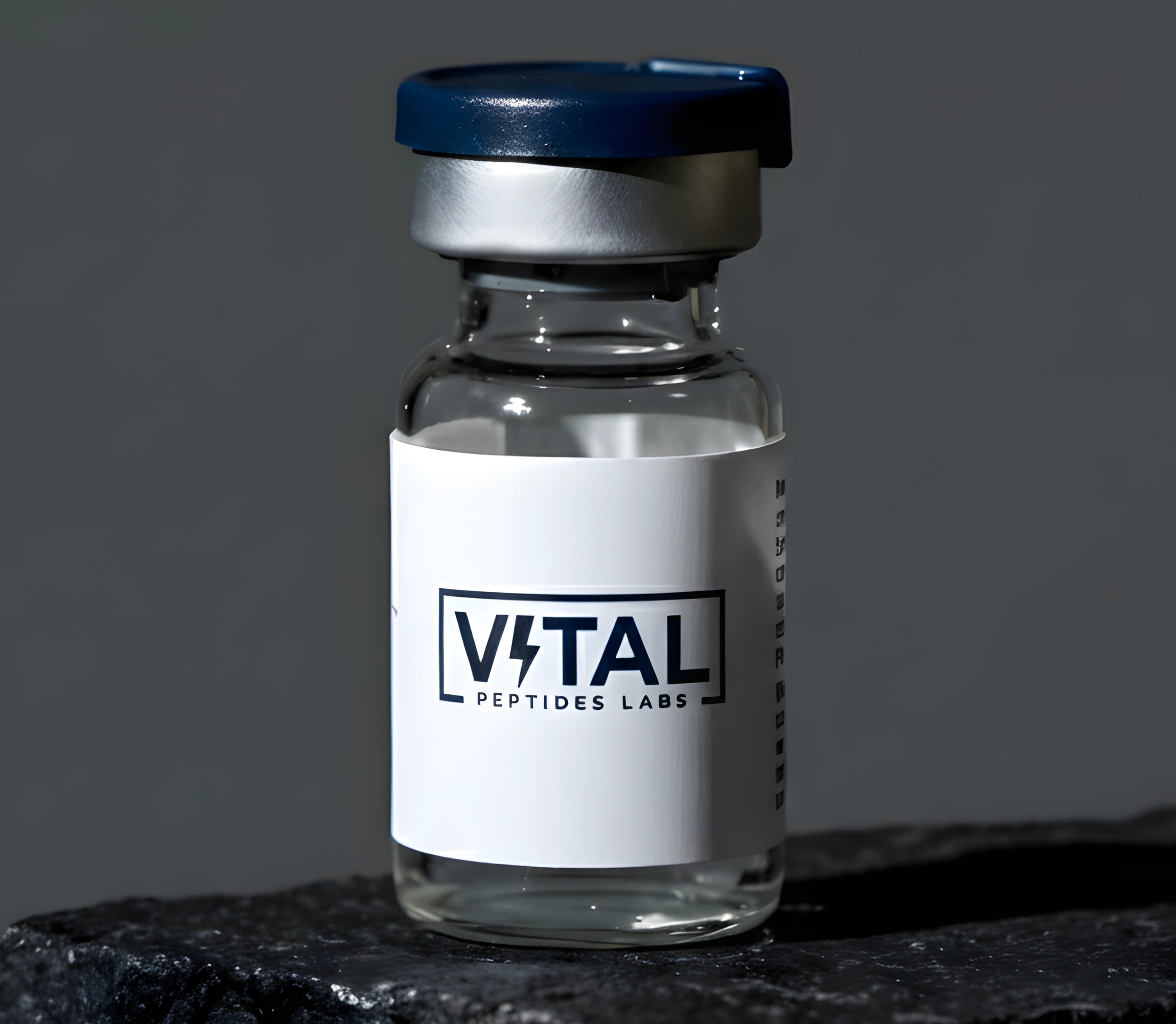
MOTS-C
Mitochondrial-optimizing peptide · From 10mg
99%+ Pure$50
Product Description
MOTS-C (Mitochondrial Open Reading Frame of the Twelve S rRNA Type-C) is a 16-amino acid peptide encoded by the mitochondrial genome. This uniquely positioned peptide functions as a mitochondrial-derived signaling molecule and has attracted significant research attention for its metabolic effects and potential role in cellular homeostasis. MOTS-C represents a new frontier in peptide research focused on mitochondrial-nuclear communication.
Expert Insight
“MOTS-C represents a paradigm shift in peptide research: a signal molecule directly encoded by mitochondrial DNA. Its investigation opens new perspectives on mitochondrial-derived factors and their systemic metabolic effects—bridging organellar biology with whole-organism physiology.”
Research Pairing Suggestions
Researchers studying mitochondrial metabolism commonly pair these because 5-Amino-1MQ boosts NAD+ while MOTS-C modulates metabolic signaling, creating complementary approaches to metabolic optimization.
Research Highlights
Mitochondrial genome-encoded peptide hormone
Mitochondrial-derived signaling molecule with metabolic effects
Emerging research on mitochondrial-nuclear communication
This calculator is a math tool only. It does not provide medical advice. Vital Peptides Labs sells research peptides for laboratory and research use only. Users are strongly encouraged to read the linked research, consult qualified professionals, and draw their own conclusions before making any decisions.
Reconstitution Calculator— MOTS-C
Research Literature — MOTS-C
The following is a summary of published research literature. This information is provided for educational reference only and does not constitute medical advice or research amount guidance.
Research Amounts in Literature
In published studies, researchers have administered MOTS-C at doses of 5–15 mg/kg in animal models. Human-equivalent research protocols commonly reference 5–10 mg per administration.
Frequency Protocols in Research
Researchers studying MOTS-C have commonly used daily to 3x/week subcutaneous administration protocols over 4–8 week study periods.
Reconstitution Concentrations in Research
Published literature reports reconstitution of 10 mg vials in 2–3 mL bacteriostatic water, yielding concentrations of 3.3–5 mg/mL. Using 2 mL (5 mg/mL) is the most commonly referenced standard.
Typical Syringe Ranges in Research
At 5 mg/mL (2 mL water), a 5 mg dose equals 100 units (1.0 mL). At 3.3 mg/mL (3 mL water), the same dose equals 150 units (1.5 mL) — may require a larger syringe.
MOTS-C
Add to your order
Pairs Well With
You'll Also Need
3mL / 23G Reconstitution Syringe
For mixing bacteriostatic water into lyophilized peptide vials
~$10–15
Buy on Amazon31G Research Syringe
For precise subcutaneous administration in research protocols
~$12–18
Buy on AmazonAlcohol Prep Pads
For sterilizing vial stoppers and work surfaces
~$5–8
Buy on AmazonBacteriostatic Water (10mL)
Sterile water with 0.9% benzyl alcohol for reconstitution
$10
ViewThis product is intended strictly for laboratory research and development purposes only. Not for human consumption, medical, veterinary, or household use. By purchasing this product, you confirm that you are at least 21 years of age and that the product will be used solely for legitimate research purposes.